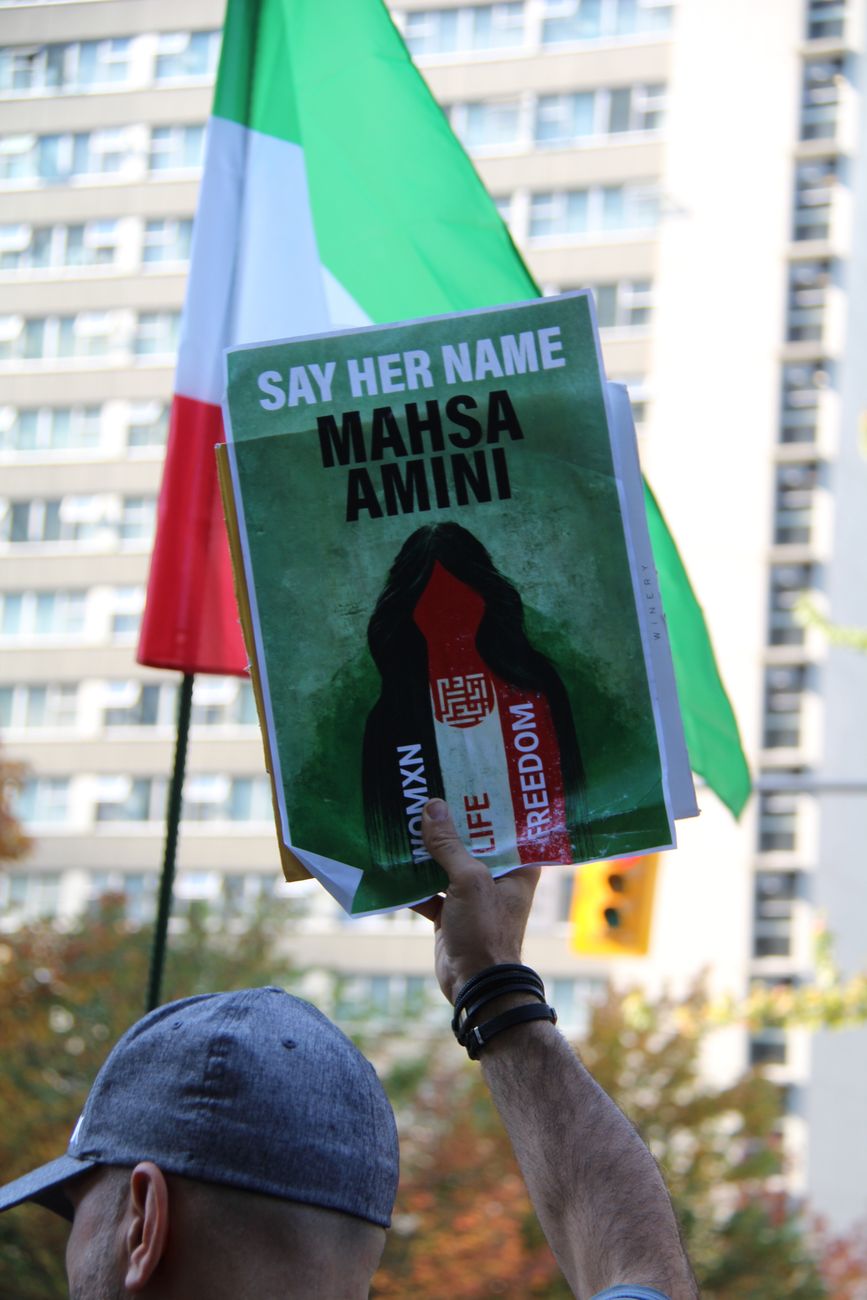
The murder of Mahsa Amini over her resistance to wearing the hijab has intensified things to a new level, but the resentment over the forced hijab in Iran isn’t new. It began as soon as the current government came into power after the 1979 revolution. Many of the protesters during the revolution just wanted freedom from the oppression of the Shah, not the religious extremism that followed. The short excerpt from Arman’s Freedom below is set in the 1980s. Zia is a fictional character, of course, but what she does in the first paragraph is not something I made up. This form of resistance was common. Keep in mind that the ‘Basij’ is what our media calls the “moral police.”
Before stepping outside, she carefully pulled out a single strand
of hair, as usual, and let it lie freely outside of the covering on her
head. It wasn’t for the look, of course. She had tried pulling out a
full tuft of hair before and was fortunate she wasn’t beaten by the
religious police, the Basij, who increasingly dominated the everyday lives of Iranians. No, it wasn’t for appearances. She pulled out the single hair for her sanity. It was one of a thousand ways she found to silently remind herself she was resisting. While all appearances pointed to defeat, she let an invisible sliver of hope blow freely around her face as she defiantly walked past the men in uniform.
Black clothing dominated the streets, especially among the
women. The birds of spring mocked her as she tried to envision the colors underneath the other women’s chadors. She imagined a sudden burst of wind yanking them all off, revealing a mosaic of
bright pastels underneath joyful faces. What she would give to have the power of that wind!
The excerpt below is a summary of the 2009 elections and the protests that followed. It’s the actual history that informs the background of my fictional characters. What’s happening today reminds me of the murder of Neda Agha-Soltan.
Hopes were high leading up to the election. The promises of
Ahmadinejad had failed miserably, destroying an already fragile
economy and leaving them under the thumb of a resurgent and
oppressive Islamic government. Mousavi, however, represented a
more progressive agenda and the people, yet again, had a faint taste of freedom. Polls leading up to the election showed him as the clear favorite in the four person race. The energy surrounding his rallies seemed to validate him as the one to beat. But the day of June 12, 2009, didn’t go the way they had hoped. It went exactly how they feared.
The first concerns were raise when a state-run media outlet
declared Ahmadinejad the victor three hours before the polls closed. It only got weirder and more brazen from there. Reports spread like wildfire through Twitter and Facebook, much of the information coming from Iranians outside of the country who had access to unfiltered news, about polling stations closing early even though long lines of people still waited to vote. Other stations ran out of ballots with no apparent effort to re-supply them. Three hours after the election, hardly enough time to count the tens of millions of paper ballots cast, the government announced that Ahmadinejad had won by twenty million votes. In spite of the great momentum carried by Mousavi, Ahmadinejad won the the four way race by a two to one margin – the one representing the three of the other candidates. The official percentage of his vote was 62.63, a number that was suspiciously repeated in individual areas throughout the nation. Even in the opposing candidates’ hometowns, Ahmadinejad claimed 62.63 percent of the votes. In other words, it seemed like they weren’t even trying to hide their cheating.
As many as two million protesters flooded cities throughout the
country, their individual shirts, hijabs, and chadors like scales of a
green dragon surging through the awakened streets. They screamed for a recount, cursed Ahmadinejad and the Ayatollah Khameini, and held signs reading, “Death to the Dictator!” In some places, tempers boiled over into acts of violence. It was open rebellion on a scale unseen since the Revolution. On the surface, it seemed as if the government had miscalculated their actions. In the end, however, they showed that this was probably not the case. Instead, it seemed that they actually invited the anger, drawing out their detractors in a way that would allow them to unleash their own.
The blowback to the protests was brutal. Basij forces were
unleashed like demons out of dark crevices of the earth. They fired guns into crowds. They threw tear gas indiscriminately. They beat them with rods, both men and women alike. They spit on them, cursed them, and relished in the pain of the rebellious crowds. The most notorious of the atrocities occurred when Basij forces shot Neda Agha-Soltan in the chest as she was walking back to her car. Her last breaths were captured on video and uploaded to the internet, spreading like wildfire among Iranians, both inside and outside of the country, and proceeded from there to capture the attention of the entire world. It galvanized the Green Movement and increased the fervor of the protestors, but to no avail. The Basij furthered their crimes on the people by what they did with the prisoners they rounded up. The infamous Evin Prison was again full and the ensuing weeks and months would reveal credible reports of torture, rape, and murder.

